

🇭🇺 Magyarország: 1848. március 15: Énekem 1848-ról és könyvem jelképes ajándékként a magyarságnak!
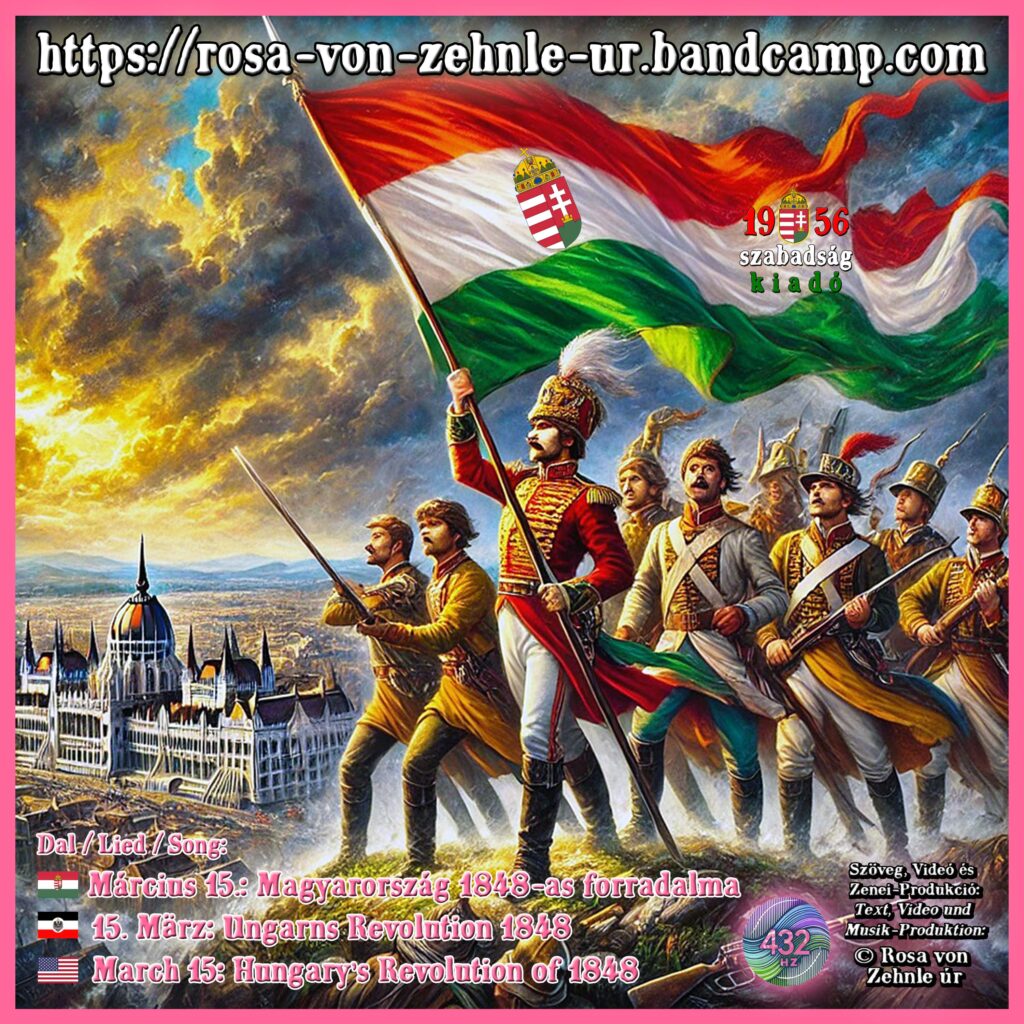
Énekem az 1848-as magyar forradalomról három nyelven:
Zene— Rosa von Zehnle úr:
Magyarország 1848-as forradalmas
🇩🇪 Ungarn: 15. März 1848: Mein Lied zu 1848 und mein Buch den Ungarn zum symbolischen Geschenk!
Mein Lied zur ungarischen Revolution 1848 in drei Sprachen:
Musik— Rosa von Zehnle úr:
Ungarns Revolution 1848
→ Dalszöveg angolul / Liedtext in EN / Lyrics in EN
Szerkesztői hozzájárulás
az 1848-as
dalfeldolgozáshoz
Az 1848/49-es magyar forradalom nemzeti függetlenségre és társadalmi reformokra törekedett. 1848. március 15-én magyarok ezrei gyűltek össze Pesten (a mai Budapesten), hogy támogassák a szabadság- és demokráciaköveteléseket, és követeljék azokat a megszállóktól. Ez felkeléshez vezetett a Habsburg uralom ellen, és drámai véget ért.
Magyarországon minden év március 15‑e a Nemzeti gyász napja az 1848-as forradalom áldozatainak emlékére. A napot a forradalom szimbólumaként és azoknak a bátor férfiaknak az emlékekére tartják meg, akik életüket áldozták országuk szabadságáért és jövőjéért. Ezen a napon az állami lobogót félárbocra eresztik, a középületekre kitűzik a gyászlobogót, az iskolákban megemlékezést tartana
Ma a magyarok megemlékeznek a tizenhárom tábornokról és a többi (legalább három) hősről, akik mártírokká váltak, és nekem ez a fontos esemény jó alkalom volt arra, hogy egy kis könyvet készítsek, és írjak róla egy dalt, különböző zenei stílusokban énekelve:
1 dal 3 nyelven, mindegyik 5 zenei stílussal = 15 zenei élmény.
Két tipikus magyar hangszert integráltam a zenémbe:
- Tárogató:A hazafias zenében gyakran használt, éles hangú fúvós fahangszer;
Duda (magyar duda):Főleg vidéken és hagyományos táncokhoz használják.
Egyébként korábban betiltották ezeket a hangszereket, mert a szabadság szimbólumai voltak. Szándékosan választottam, mert Dudát manapság már alig hallani. Erről a későbbiekben posztot készítek itt.
Most élvezze
a zenehallgatást!
🇭🇺 Refrén:
„Magyarország 1848-as forradalma”*
[chorus]
Az egykori márciusi szél tisztán visszhangzik,
A magyarok szabadságvágya megerősödik.
A hősök tisztán, hangosan szóltak akkor rég,
szellemük őrzi még országunk szabad jövőjét.
[chorus]
Erős és szabad, magyarok, keljetek fel!
Ma ismét szól a régi hívás – siessetek!
A magyarok még nem igazán szabadok,
ma leigázza őket Brüsszel vörös fecsegése.
…
Énekem az 1848-as magyar forradalomról három nyelven:
Zene— Rosa von Zehnle úr:
Magyarország 1848-as forradalmas
Redaktioneller Beitrag
zur 1848er
Liedgestaltung
Die Ungarische Revolution von 1848/49 strebte nach nationaler Unabhängigkeit und sozialen Reformen. Am 15. März 1848 versammelten sich abertausende Ungarn in Pest (dem heutigen Budapest), um die Forderungen nach Freiheit und Demokratie zu unterstützen und von den Besatzern zu fordern. Dies führte zu einem Aufstand gegen die habsburgische Herrschaft und endete dramatisch.
Jedes Jahr am 15. März wird in Ungarn dieser Nationale Trauertag begangen, um der Opfer der Revolution von 1848 zu gedenken. Der Tag wird als Symbol der Revolution und als Erinnerung an die mutigen Männer gefeiert, die für die Freiheit und Zukunft ihres Landes ihr Leben opferten. An diesem Tag wird die Nationalflagge auf Halbmast gesenkt, an öffentlichen Gebäuden wird die Trauerflagge gehisst und in Schulen finden Gedenkfeiern statt.
Heute gedenken die Ungarn der dreizehn Generäle und weiterer (mindestens drei) Helden, die zu Märtyrern wurden und für mich war dieses bedeutende Ereignis Anlaß, ein kleines Buch zu gestalten und ein Lied darüber zu schreiben und es in verschiedenen Musikrichtungen zu gestalten:
1 Lied in 3 Sprachen und mit je 5 Musikstilen = 15 Hörerlebnisse.
Ich habe zwei typisch ungarische Musikinstrumente in meine Musikgestaltung integriert:
- Tárogató:Ein Holzblasinstrument mit scharfem Klang, oft in patriotischer Musik verwendet;
- Duda (ungarischer Dudelsack):Besonders in ländlichen Regionen und für traditionelle Tänze genutzt.
Früher waren diese Musikinstrumente verboten, da sie Freiheitssymbole waren. Ich habe sie bewußt gewählt, da vor allem die Duda heute kaum noch zu hören ist. Ich werde dazu später noch einen Beitrag hier machen.
Nun aber viel Spaß
beim Anhören!
🇩🇪 Refrain:
„Ungarns Revolution 1848”*
[chorus]
Der einstig´ Märzwind hallt im klaren Klang,
Ungarns Volk erstarkt im Freiheitsdrang.
Die Helden riefen einst klar und laut,
Ihr Geist heut´ Ungarns freie Zukunft baut.
[chorus]
Steht auf, ihr Magyaren – stark und frei,
gestrig´ Ruf klingt heut´ wieder – eilt herbei.
Noch immer sind Magyaren nicht richtig frei,
Brüssel knechtet heut´ mit rot´ Rederei.
…
Mein Lied zur ungarischen Revolution 1848 in drei Sprachen:
Musik— Rosa von Zehnle úr:
Ungarns Revolution 1848
* Szöveg és zene /Text und Musik: Rosa von Zehnle úr.
Rosa von Zehnle úr
Ùjudvar, 2025.02.03
https://175er-verlag.org/.recherchiert/archive/4588
Dalszöveg angolul / Liedtext in EN / Lyrics in EN
For the lyrics (three languages: HU, DE and EN) of my Hungarian revolutionary song from 1848 please
»> here …
The song on HU, DE and EN on Bandcamp:
» hier …
Editorial contribution
on the 1848 song
The Hungarian Revolution of 1848/49 strove for national independence and social reforms. On March 15, 1848, thousands of Hungarians gathered in Pest (present-day Budapest) to support the demands for freedom and democracy and to demand them from the occupiers. This led to an uprising against Habsburg rule and ended dramatically.
Every year on March 15, Hungary observes this National Day of Mourning to commemorate the victims of the 1848 Revolution. The day is celebrated as a symbol of the revolution and as a reminder of the brave men who sacrificed their lives for the freedom and future of their country. On this day, the national flag is lowered to half-mast, the mourning flag is raised on public buildings, and commemorations are held in schools.
Today, Hungarians commemorate the thirteen generals and other (at least three) heroes who became martyrs. For me, this significant event was the occasion to create a small book and write a song about it, enacting it in various musical styles:
1 song in three languages, each with five musical styles = 15 listening experiences.
I have incorporated two typically Hungarian musical instruments into my musical composition:
- Tárogató: A woodwind instrument with a sharp sound, often used in patriotic music;
- Duda (Hungarian bagpipe): Used especially in rural areas and for traditional dances.
These musical instruments were once forbidden because they were symbols of freedom. I chose them deliberately, as the duda, in particular, is rarely heard today. I will write a post about this later.
For now,
enjoy!
🇺🇸 Lyrics:
„Hungary’s Revolution of 1848”*
[chorus]
The March wind of old echoes bright and strong,
Hungary’s people rise in freedom’s song.
The heroes once called, so clear and loud,
Their spirit builds Hungary’s future proud.
[chorus]
Rise, Magyars — strong and free,
Yesterday’s call still sounds — come and see.
Yet Magyars are not truly free,
Brussels enslaves today with red decree.
The song on HU, DE and EN on Bandcamp:
»> here …
* Text and music: Rosa von Zehnle úr.
Views: 44